Everyday activities such as getting dressed, brushing teeth, using cutlery and preparing for school are important parts of a child's growing independence. However, for some children, these tasks can feel difficult, frustrating or overwhelming.
Occupational therapy for daily living skills helps children develop the practical, physical and sensory abilities they need to manage everyday activities with greater confidence. Through personalised support, children can build independence at their own pace while developing skills that support their wellbeing at home, at school and in the wider community.
At The Children's Therapy Company, we provide compassionate, child-centred occupational therapy, helping children overcome everyday challenges and feel more confident in their abilities.
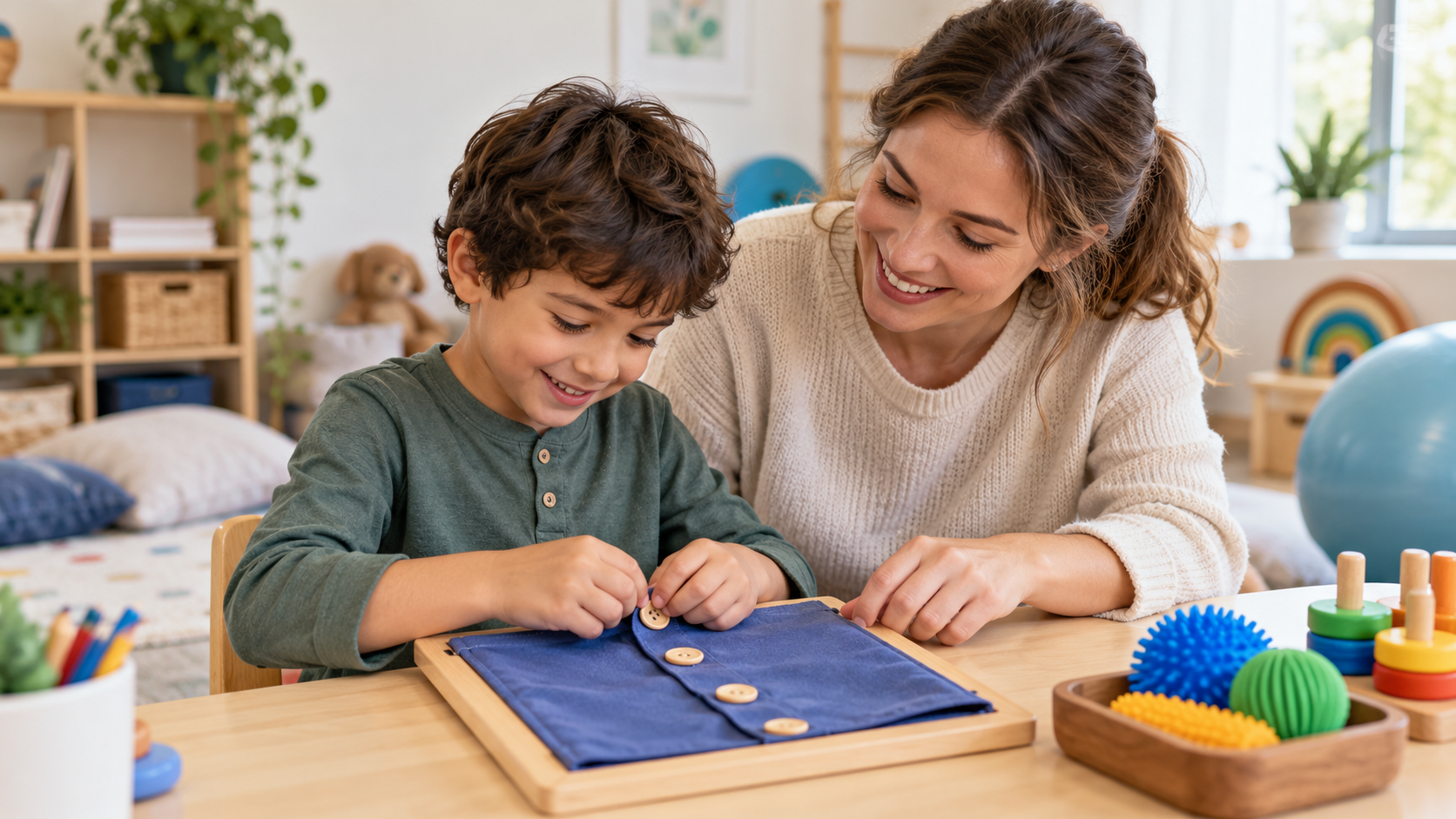
What Are Daily Living Skills in Occupational Therapy?
Daily living skills, sometimes called activities of daily living (ADLs), are the everyday tasks children learn as they grow and become more independent.
These include personal care activities such as dressing, washing, eating and using the toilet, alongside practical routines such as organising belongings and getting ready for school.
Developing these skills involves several areas of development, including:
Fine motor skills: Using hands and fingers for tasks such as fastening buttons, tying shoelaces and handling cutlery.
Gross motor skills: Maintaining balance, posture and coordination during everyday activities.
Sensory processing: Managing sensory experiences associated with clothing, food textures, sounds and personal care.
Motor planning: Understanding, organising and carrying out sequences of movements.
Emotional regulation: Managing frustration, anxiety or overwhelming feelings during daily routines.
When children experience difficulties in these areas, seemingly simple activities can become challenging.
How Can Occupational Therapy Help Children Become More Independent?
Paediatric occupational therapy helps children develop the skills and strategies needed to participate more comfortably and independently in everyday life.
An occupational therapist considers what a child finds difficult, why those challenges may be occurring and what support could make activities more manageable.
For example, a child who struggles with dressing may experience difficulties with coordination, fastening clothing or tolerating certain fabrics. Another child might find mealtimes challenging because of sensory sensitivities or difficulties using utensils.
Our children's occupational therapy services are tailored to each child's needs. Support may involve practising specific movements, adapting activities, introducing supportive equipment or developing strategies that make everyday tasks more accessible.
The aim is not simply to complete an activity but to help children feel capable and confident while developing meaningful independence.
Supporting Dressing, Eating and Personal Care Skills
Daily living skills are closely connected to a child's ability to participate in family routines and school activities.
Dressing and Getting Ready
Some children find buttons, zips, shoelaces or putting clothes on in the correct order particularly difficult.
Occupational therapy can support dressing skills through activities that develop coordination, fine motor control and the ability to follow sequences.
Breaking tasks into manageable steps and introducing practical adaptations can also help reduce frustration.
Eating and Mealtime Independence
Using cutlery, maintaining an appropriate sitting position and managing different food textures can present challenges for some children.
A children's occupational therapist can explore whether motor coordination, posture or sensory processing differences are affecting mealtimes.
Individualised strategies can then support greater comfort and participation during eating.
Washing, Toothbrushing and Toileting
Personal care routines can involve complex combinations of movement, sensory processing and organisation.
Children who find these activities difficult may benefit from visual routines, gradual skill development and environmental adaptations that encourage independence.
Why Are Sensory Processing Skills Important for Daily Routines?
Sensory processing affects how children experience and respond to information from their bodies and surroundings.
For example, a child may find the sensation of brushing their teeth uncomfortable, become distressed by particular clothing textures or struggle with noisy environments.
These responses can make everyday routines more difficult, even when a child understands what they need to do.
Occupational therapy for sensory processing difficulties can help identify sensory needs and develop practical approaches that make daily activities more comfortable.
At The Children's Therapy Company, our sensory assessments and occupational therapy support consider sensory processing alongside motor coordination, emotional regulation and self-care skills, recognising that these areas often influence one another.
When Should You Consider Occupational Therapy for Daily Living Skills?
Children develop independence at different rates, and occasional difficulties with everyday activities are not necessarily a cause for concern.
However, an occupational therapy assessment may be beneficial when challenges regularly affect a child's confidence, participation or ability to complete age-appropriate tasks.
For instance, a child may consistently avoid dressing independently, become distressed during personal care routines or require considerable support with activities they would like to manage themselves.
An assessment can help identify their strengths, understand the difficulties they experience and establish appropriate goals.
Building Confidence Through Everyday Achievements
Developing independence is about more than learning practical skills. Successfully completing everyday activities can also strengthen a child's confidence and willingness to try new things.
Small achievements, such as fastening a zip independently or becoming more comfortable with toothbrushing, can make a meaningful difference.
Progress looks different for every child. Some may develop greater independence with particular tasks, while others benefit from adaptations and ongoing support.
Celebrating individual achievements and building on existing strengths can help children approach everyday challenges more positively.
How The Children's Therapy Company Supports Daily Living Skills
At The Children's Therapy Company, we understand that every child's needs, strengths and experiences are different.
Our personalised children's occupational therapy services include assessments and tailored interventions addressing self-care, sensory processing, fine and gross motor skills, coordination and emotional regulation.
We also offer Activities of Daily Living (ADL) and Independent Skills Assessments to explore how children manage everyday routines and identify practical ways to support their independence.
Our child-centred approach to occupational therapy involves working closely with parents, carers and schools, providing individualised programmes and recommendations that can be incorporated into daily life.
Our occupational therapy services are available across Sussex, Kent and South London, with sessions offered at home or in school, depending on each child's needs.
If your child is finding everyday activities challenging, contact The Children's Therapy Company to discuss how our occupational therapy services can help them build practical skills, independence and confidence for life.